What A Nutritionist Eats In A Day | Alysha Izoco RD, LD

Eating real food is a simple, life-changing way of eating. We know because we hear amazing testimonials every day from our clients. However, with our ever-busy schedules, packaged convenience foods at our fingertips, and fast food plus curbside options everywhere you go, eating real food isn’t always easy.
To share some inspiration on meal planning and show that we not only “talk the talk” but “walk the walk,” we’ve asked registered dietitian Alysha to share some tips and tricks of what she does to eat real food while living a full, busy life:
Tips for Food Prep
Q: Alysha, how do you plan for a week of real food?
A: I ensure that I have a variety of real foods on hand at all times. I am a creature of habit, so routines are key for me! Every Monday after work I go to Costco and pick up some real food staples, then Thursday I like to stop at Trader Joe’s to grab some other essentials. Wednesday and Sundays are my “meal prep days/nights” where I prep a few lunch meals and portion out some snacks to have ready for the week.
Q: What are your top five items used in the kitchen?
A: Here are my top five:
- My all-time favorite “kitchen tool” is a very large Tupperware bowl that comes with a tight-fitting lid; I use this all the time to prep a giant salad that I can then pull from to make individual lunches later on (don’t forget to add your protein and fat though!).
- Small tupperware containers are also a must in my house. I have tiny ones for salad dressings and small ones for portions of nuts, nut butters or olives
- My crock pot is my best friend, especially in the colder months!
- I also LOVE my insulated thermoses. I have one for my coffee/tea, a 40 oz one for water, and a 32 oz one for my protein shakes. They keep my beverages nice and cold, or piping hot!
- Lastly, I have definitely got my money out of my blender! It is my go-to when I am pressed for time in the morning as I can whip up a protein shake in just a few minutes.
Q: What tricks do you use that make meal prep easier?
A: I like to make things easier for myself by buying pre-portioned items when I can. For example, I like to buy single serving cups of Greek yogurt and guacamole. Rather than buying a big bag of jerky that I would have to portion out to take to work for a protein snack, I now buy individual meat sticks that are already proportioned for me.
I also always try to make leftovers. For example, if I am sautéing vegetables for dinner, I will make sure I make extras for the next morning for my morning egg scramble. I often find myself using leftovers from dinner for my breakfast or lunch the next day, like leftover steak to pair with my eggs or leftover chicken to add to a salad for protein for lunch.
Q: What do you always keep on hand?
A: In my fridge you can pretty much always find Greek yogurt, individual guacamole cups, deli meat, a rotisserie chicken, nut butters, salad mix (love the cruciferous crunch mixes), baby carrots, and small apples.
In my dry storage I always have a variety of nuts, jerky/meat sticks, cans of diced tomatoes and black beans, and flavored sparkling waters.
What To Eat
Put into action, what does that actually look like? Is it possible to eat home cooked, nutrient-dense meals frequently throughout the day while being a fulltime dietitian? Yes! And here’s a behind-the-scenes look at a day of Alysha’s meals:
Breakfast (6:00-7:00am)
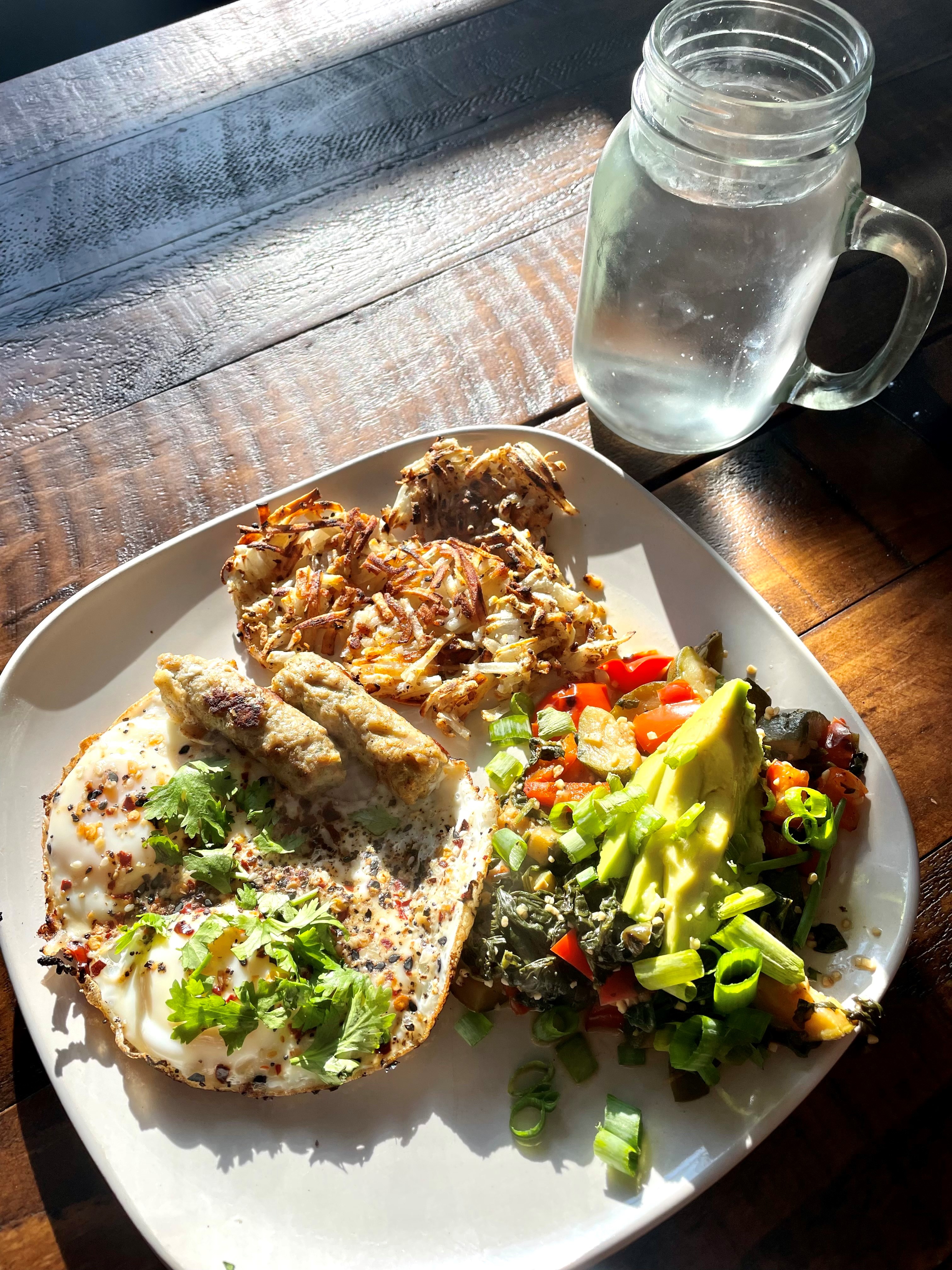
- 2 eggs cooked in avocado oil topped with red pepper flakes and Everything But The Bagel seasoning
- 2 nitrate free pork sausage links
- 1/2 cup hashbrowns cooked in butter
- sauteed spinach, summer squash, bell peppers, and garlic topped with cilantro, green onions and avocado
Mid-morning Snack (10:00am):
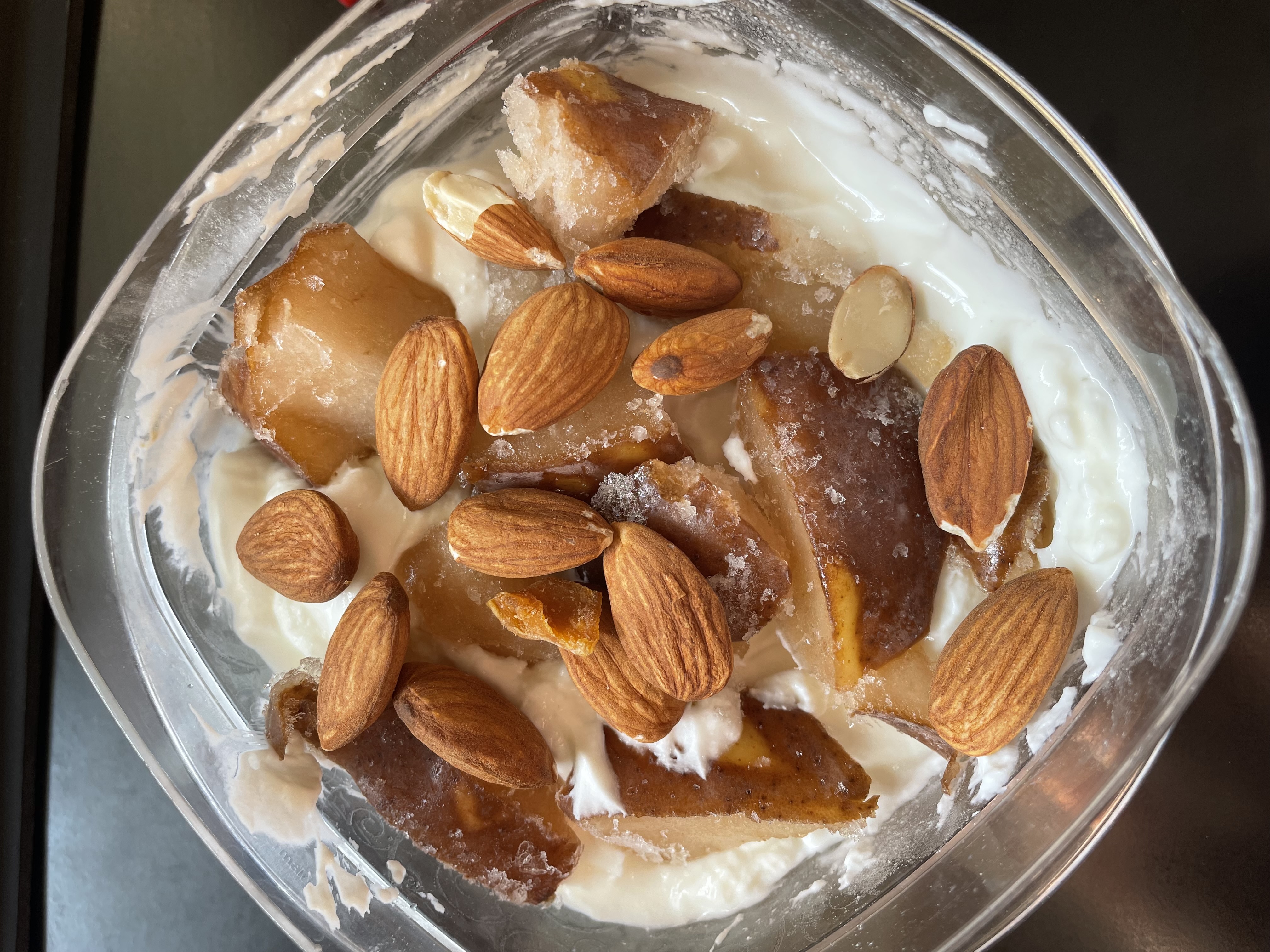
- 3/4 cup full fat Greek yogurt + 1/4 cup frozen pears cubed + almonds
Lunch (1:00pm):
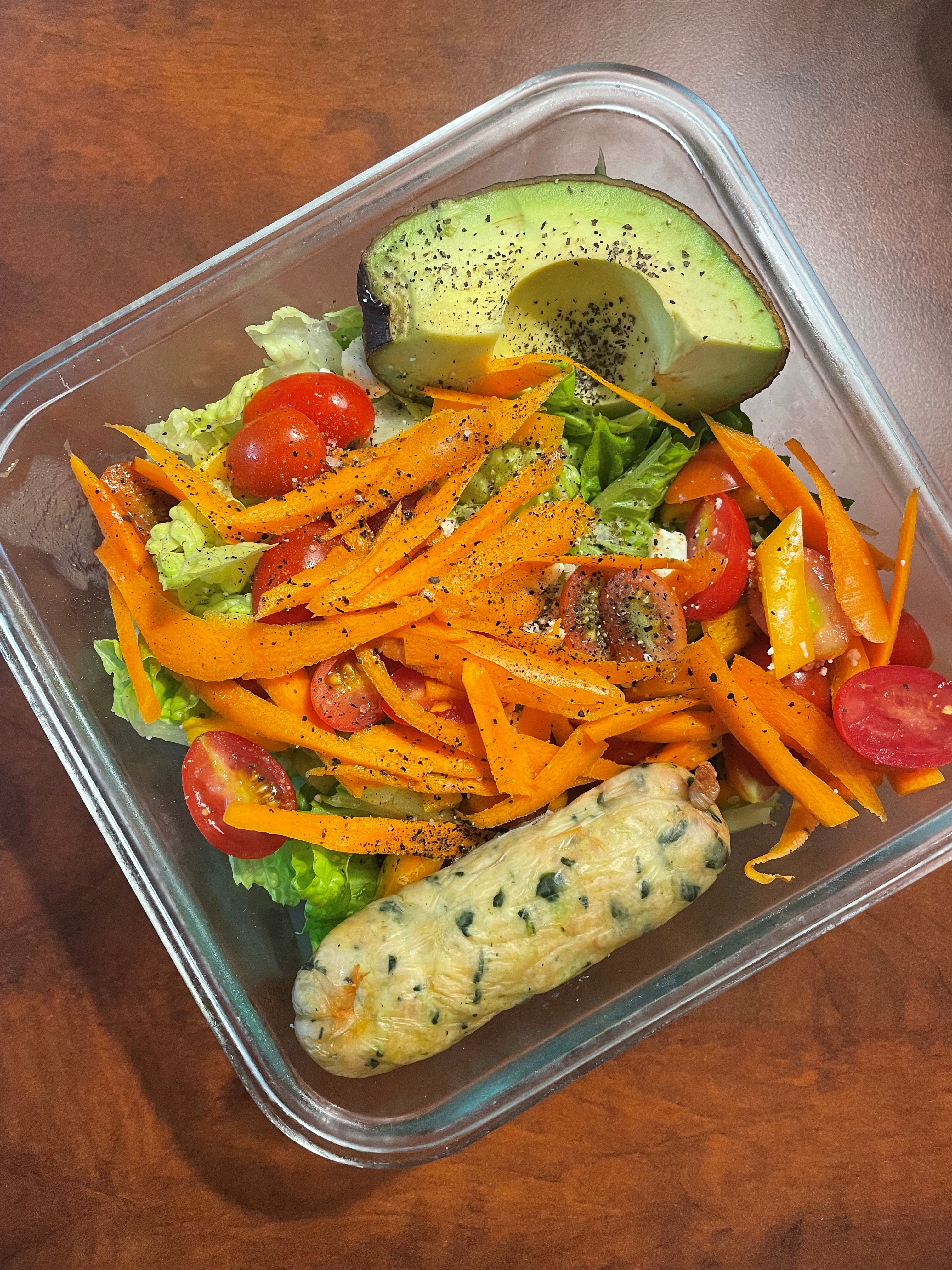
- romaine lettuce, bell peppers, tomatoes, carrots, sprinkle of feta cheese,
- 1/2 avocado
- 1 nitrate-free feta-spinach chicken sausage link with 21 Salute Seasoning (Trader Joes)
- olive oil/vinegar for dressing
Afternoon Snack (4:00pm):
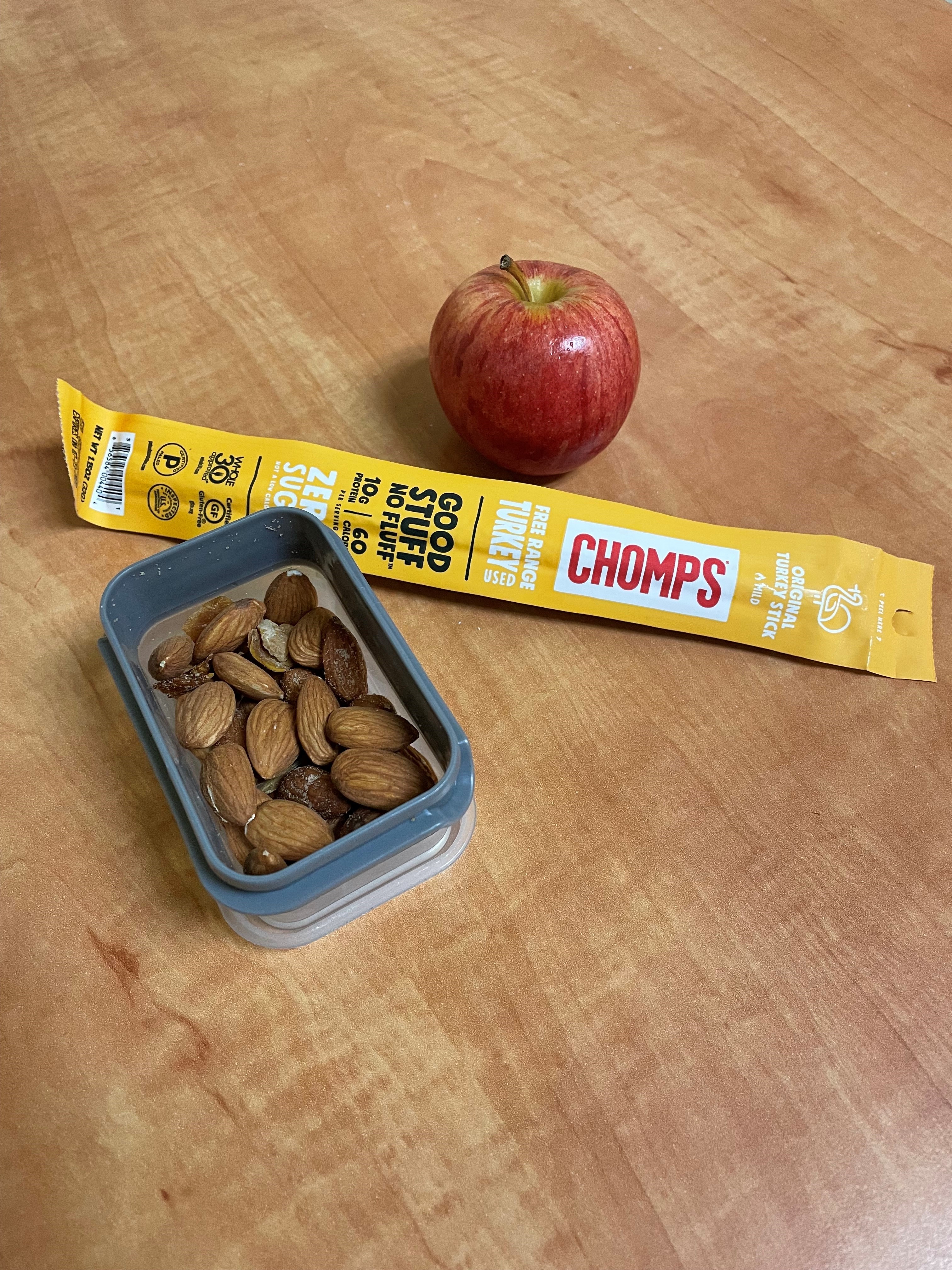
- Chomps meat stick (9 grams protein)
- almonds
- small apple
Dinner (7:00pm):
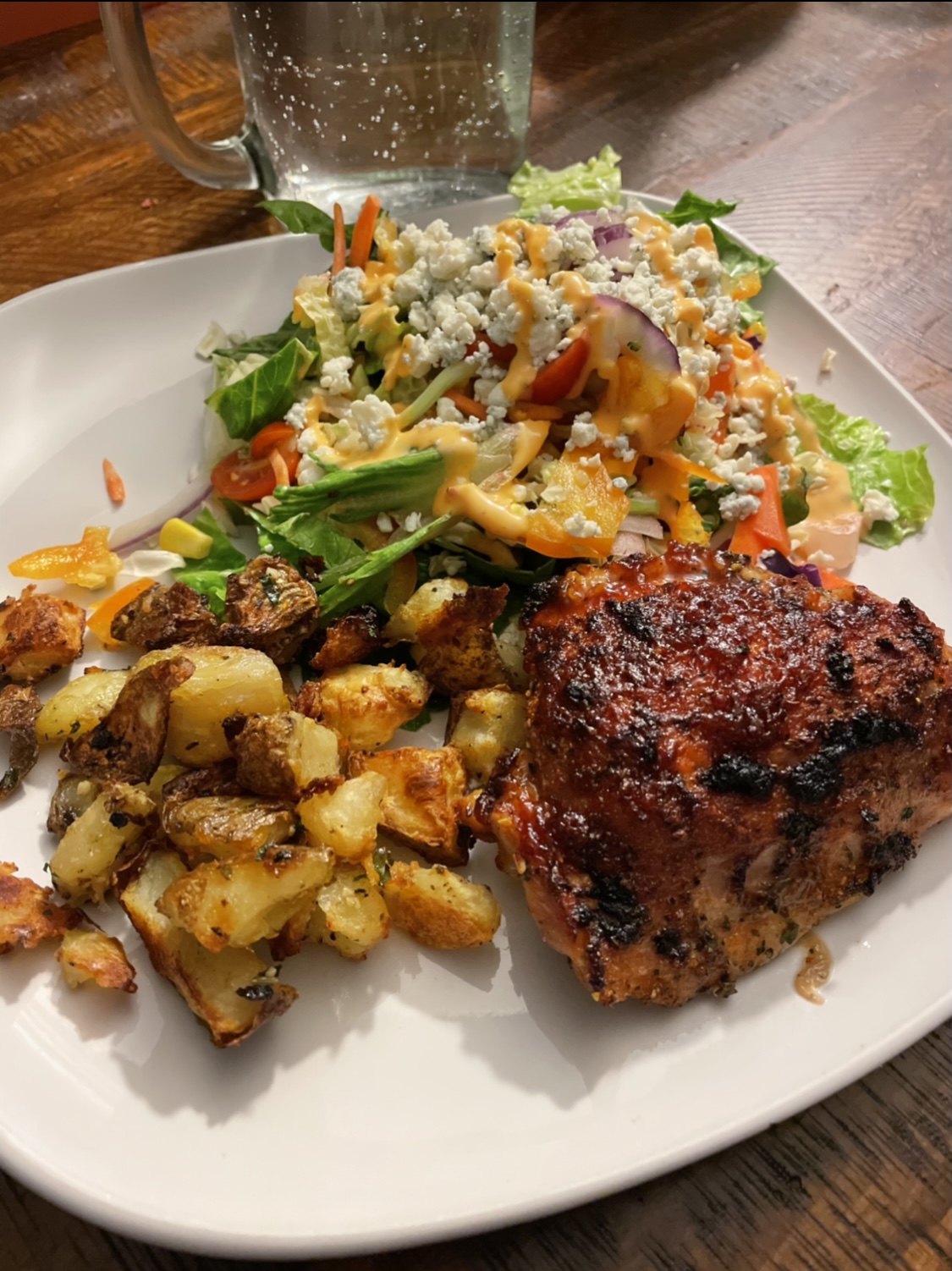
- 4 oz baked chicken thigh (coated with avocado oil, salt, pepper, and 21 Salute Seasoning)
- 1/2 cup potatoes
- side salad with carrots, red onion, cherry tomatoes, broccoli, blue cheese, and Primal Kitchen BBQ Ranch made with avocado oil
And there you have it! Ideas to keep your blood sugar balanced, moods boosted, cravings satisfied, and a restful night of sleep on the horizon by always including a protein, fat, and carbohydrates. Plan out your meals and snacks. Keep your pantry and your fridge stocked with your favorites, make extras, and look for pre-portioned options to make it easy to throw (in a lunch bag) and go!
For more information on eating real food and meal prepping, check out these additional resources:
- Read: How To Eat Healthy When Traveling (Tips From The Nutritionists!) for more eating-on-the-go tips
- Listen: Kitchen Shortcuts podcast with chef Marianne and dietitian Teresa
- Try: White Chicken Chili in your crockpot or Warm Pumpkin Spice Latte Smoothie in your blender
- Learn: Virtual Cooking Demonstration classes for cooking efficiently and confidently
Share This Article