What is the Microbiome? What Does it Do and How to Keep It Healthy

 Hippocrates famously said that “all disease begins in the gut.” For those of us that have experienced any kind of digestive imbalance, acute or chronic, you know the truth of this statement all too well. Nothing feels right when your gut is off kilter. I say “us” because I’ve been there also. For me, it started in college with gas bubbles and bloating no matter what I ate, morphed into loose bowel movements several times per day, and continued for years after graduation. I also developed arthritic knee pain (I was in my mid-20s at this point, mind you!) and anxiety would hit seemingly out of nowhere. At one point, my digestive “defense system” was so low that I had three bouts of food poisoning in a three-month period. It wasn’t until I was in graduate school that I was introduced to the idea of a “microbiome,” or that bacteria living in my intestines could affect my health. And it certainly wasn’t until I learned the healing powers of real food that I was finally able to find digestive relief, and, to my surprise (and relief), also significantly control my joint pain and moods.
In my work as a dietitian, I can truly empathize with my clients and assure them that they, too, can experience freedom from their tummy troubles. There are usually nice side benefits also, like less brain fog, more energy, fewer cravings, less pain, clearer skin and more.
Are you intrigued yet? Let’s dive in a little more!
What Is the Microbiome?
This can be confusing, but microbiome is one of many names referring to the living microorganisms that reside in and on the human body: microbiome, microbiota, probiotics, good gut bugs, gut bacteria, intestinal flora, are just a few examples of the other names you may have heard before. As humans, we are made up of human cells with human genes, but our bodies also have a MASSIVE collection of other organisms and their genes. In fact, we have ten times more microbial cells than human cells, and 100 TIMES more microbial genes than human genes!1 This discovery opened up a new world of thinking: could these microbes have a GREATER impact on our health and well-being than our human cells?
The intestinal tract is the area of the body that is especially rich with these microbes and their genes, and has stolen much of the research limelight in recent years. Our gut “rainforest” is made up of 400-1,500 different microbial species, and it’s a delicate balance between beneficial, harmful and neutral microbes.3 In fact, the more diversity our gut has, the healthier it is.
When functioning properly, our microbiomes are able to:
- Aid in digestion and absorption of food
- Keep our intestinal lining intact (i.e., prevention of “leaky gut” which is when you have holes in the lining of your intestinal tract that allows food, bacteria and other things from your intestines to escape into your blood stream)
- Support the immune system, brain function, and much more
But what about when the microbiome is unbalanced? As mentioned earlier, a healthy gut typically has balanced diversity of species; so a shift toward more harmful microbes/fewer beneficial microbes, can have a negative impact on our health.
Here are some digestive signs to watch for that signal your microbiome is in distress:
- Heartburn
- Gas
- Bloating/cramping/pain
- Indigestion
- Constipation
- Diarrhea
- Early fullness
- Nausea/vomiting
- IBS
- Inflammatory bowel disease: Crohn’s, colitis
- Colon cancer
Now, the tricky part – an imbalanced microbiome can also be a factor in non-digestive-related symptoms and disorders, such as:
- Brain fog or memory loss
- Anxiety and depression
- Autism, ADHD
- Joint or muscle pain
- Autoimmune diseases like Hashimoto’s (low thyroid function), rheumatoid arthritis, multiple sclerosis, etc.
- Obesity
- Frequent illnesses and infections
- Asthma
Yikes. Let’s avoid that long list of undesirable symptoms, shall we? How about some good news to get us started – 60% of our microbial diversity is impacted by our food choices, and our microbes are relatively quick to adapt and shift to changes in diet.3 We have the power to have a major impact on our gut health and diversity simply through what we put in our mouths. I’ve had many clients see improvements in their digestion, brain function and pain levels in a few days to a few weeks.
What foods and vitamins keep our microbiome healthy?
- Whole vegetables and fruits – The different fibers (i.e., prebiotics) in our foods provide fuel and sustenance to all the different species of gut microbes.
- Aim for 25-30g of fiber per day (as an example, the following combination equals 30g fiber: 1 c. kale, ½ c. great northern beans, ½ c. onion, ½ c. brown rice, 1 T. ground flax seeds, 1 c. green beans, 2 c. cabbage, 3 apricots, 1 orange)
- Aim for 1-3 cups of vegetables at EVERY MEAL, and a small piece of fruit or berries at snacks
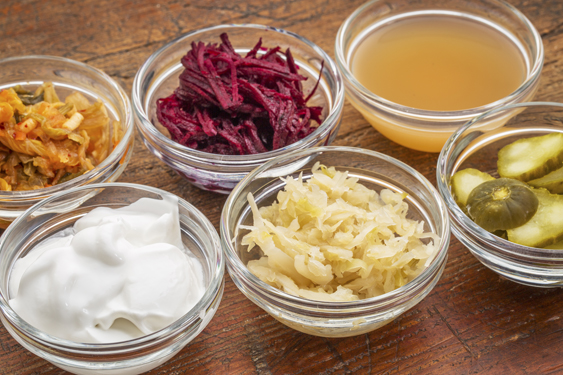 Fermented foods – Rich in probiotics (the good bacteria), foods such as whole-milk yogurt or kefir, sauerkraut, kimchi, kombucha, fermented vegetables (such as carrots and beets) support a healthy microbiome. Sauerkraut or kimchi on a burger or alongside meatballs or a roast is delicious!
- Omega-3 Oils – Find these in fatty fish, eggs from pasture-raised chickens, grass-fed meats, or sea vegetables.4 If fish isn’t a favorite, you may want to supplement with 3,000-4,000mg per day of a quality Omega-3 oil. Too many omega-6’s from refined oils like soybean oil, canola oil, corn oil, or cottonseed oil hinders growth of beneficial bacteria species.
- Adequate Vitamin D – While more research into this area needs to be done, the current evidence5 suggests Vitamin D is important for microbial diversity. Get your Vitamin D level checked at your doctor’s office (aim for a level between 50-80ng/mL), and supplement if necessary with 2,000-4,000 IUs per day.
- Daily Probiotics – Taking a probiotic daily helps to ensure you have lots of beneficial bacteria in your intestinal tract. As mentioned above, having a diversity of different beneficial bacteria is best. Ther-biotic and Biotic 7 are two probiotics that have multiple types of bacteria to promote diversity. Just take 1 capsule per day, which could be taken before breakfast or before bed.
The information presented here is just the tip of the iceberg of what we know about gut health and the microbiome, and there’s certainly much more that has yet to be discovered. This a great place to start and, for many people, it makes all the difference in how they feel and function. If you’re overwhelmed by symptoms or still unsure of how to navigate the best route for you, an appointment (by phone or in-person) with one of our nutritionists or dietitians can help give you the direction you need and get you on the path to healing.
Resources
Share This Article