Why Women Need Protein For Weight Loss

 Over the years, many women have come to us as clients or students to learn how nutrition can help them accomplish their health goals. These goals can range from resolving digestive issues, managing hot flashes, fertility, autoimmune conditions, frequent urinary tract infections, an osteoporosis or osteopenia diagnosis, and a variety of other reasons.
Many times, women come to us for help with weight loss or body composition changes, especially in perimenopause when storage of body fat changes from the hips to the dreaded belly fat.
If you’ve been with us for a while (if you’re new, hi!), you know that we talk about balancing your real food meals for any health goal with “the big three”: protein, fat, carbohydrates (of the veggie and fruit variety!).
In this article, we’d like to focus on protein as part of a healthy diet and why that macronutrient in particular is essential for women working on weight loss.
What Is Protein?
Proteins are long chains of amino acids.
Your body has thousands of different proteins that each have important jobs within the body.
Each protein has its own sequence of amino acids. This sequence makes the protein take different shapes and have different functions in your body.
I like the way an article from the Cleveland Clinic explains it: you can think of amino acids like the letters in the alphabet. When you combine the letters in various ways, you make different words. The same goes for amino acids. When you combine them in various ways, you make different proteins (1).
These different combinations of amino acids, which make up protein, grow and repair body tissues. They make your digestive enzymes to help you break down the food that you're eating and they make hormones (like insulin, human growth hormone, and your thyroid hormones).
Proteins are the building blocks of your neurotransmitters, or the chemical messengers in your brain, such as dopamine and serotonin.
Protein is also a food, so it functions as an energy source and fuel for the body.
Protein doesn’t cause big spikes in blood sugar like carbohydrates do and will actually help the body metabolize the carbohydrates you do eat by pairing a protein with it.
Protein is responsible for the growth and maintenance of your hair, skin, and nails.
It helps to build muscle and bones and it boosts the immune system by activating the defense mechanisms that that immune system has.
Why Women Need Dietary Protein For Weight Loss
In addition to all of its other benefits, protein is the most important nutrient for weight loss, and increases metabolism by 30% for several hours, every time you eat it! Eating protein five to six times per day keeps your metabolic fire fueled all day long.
A study conducted by the Food Science and Human Nutrition Department at the University of Illinois in 2000 found that protein improves body composition and blood lipid profiles during weight loss in adult women. The amount of protein used in the study was 125 grams of protein per day (17 ounces).
An international exercise physiologist and nutrition scientist for women, Dr. Stacey Sims says, “The right amount of this essential macronutrient [protein] keeps your female physiology working its best. Building and maintaining muscle is essential not just for performance but also for health and longevity. Lower muscle mass is associated with increases in metabolic syndrome and cardiovascular disease, and muscle mass is inversely related to death by any cause, meaning more muscle helps you live longer, and better. It also helps keep you independent as you age.” (2)
Put simply: eating protein helps you build muscle, which in turn enables your metabolism to work more efficiently.
If fat loss is your goal, building and maintaining muscle is key and eating sufficient protein will get you there.
Muscle Gain & Higher Protein Intake For Women Who Want Weight Loss
This connection between building muscle and eating protein is so important, it deserves it’s own little section.
You can't build muscle without protein.
You can spend all day at the gym exercising, but your effort isn’t going to work without adequate protein. You can't build a brick wall without bricks, and you can't build muscle without protein.
Don’t worry, you won't get big and buff if you strength train and eat higher protein. It is extremely difficult for women to put on that kind of muscle.
But the muscle you do build is what you need for independent living and quality of life, especially as women hit the perimenopause and menopause ages where there’s lots of hormone changes.
Some examples:
- Having the strength to get up off the toilet independently (or to sit down for that matter!)
- Having the strength to get groceries out of the car and into house independently
- Having the strength to lift your own suitcase into the overhead compartment on an airplane
If you want to age gracefully and live a full mobile life for as long as you can, protein is key.
Signs You’re Not Getting Enough Protein:
Before we get to how much protein is optimal, let’s look at some symptoms that might indicate you aren’t getting enough:
- Trouble building muscle or changing body composition
- Stall in weight loss or increase in weight gain
- Brittle nails, dry skin, thin hair
- Always hungry, never feeling satisfied, or constant cravings
- Tired and low energy
- Getting sick, sore, or injured
- Slow recovery after exercise
- Difficulty concentrating, forgetful, or foggy brain
How Much Protein Do Women Need
The Recommended Daily Allowance (RDA) for protein is a minimum .8 grams of protein per kilogram of body weight per day. However, we talked about the RDA limits before on our podcast.
These minimums are set as a baseline so you aren’t deficient. In order to thrive and to take into account how much energy you expend, women typically need more than that.
-
Women: 100 pounds for the first 5 feet of height + 5 pounds for each additional inch.
(So, a woman who is 5’6” would land around 130g of protein per day if aiming for 1g/pound.) -
Men: 106 pounds for the first 5 feet of height + 6 pounds for each additional inch.
At Nutritional Weight & Wellness, we recommend about 3-5 ounces of protein at each meal and 2-3 ounces at each snack for women. If you like to track in grams of protein, we recommend 21-35 grams of protein at meals and 14-21 grams of protein at snacks. Men typically need about 6 ounces at meals and 3-4 ounces for snacks.
Using this as a guideline and then tailoring it to how you feel is a way to customize this protein plan to fit for you.
For weight management, eating more protein is helpful because it's so satiating. When you feel satisfied, there’s less snacking on junk food.
Many times, weight loss is less about what people are eating at meals and more about what they are eating IN BETWEEN meals.
Once the focus is put on adequate protein (and veggies) at those meals, “the nibbles and bits” (as our dietitian Melanie likes to say) stops sabotaging weight loss.
Healthy High Protein Foods
It’s really important to get protein rich foods because some of the essential amino acids that assist in all those body functions mentioned earlier are ones that our body can’t make on its own.
We need to get these essential amino acids from the foods that we eat and the foods that contain all nine essential amino acids are called complete proteins.
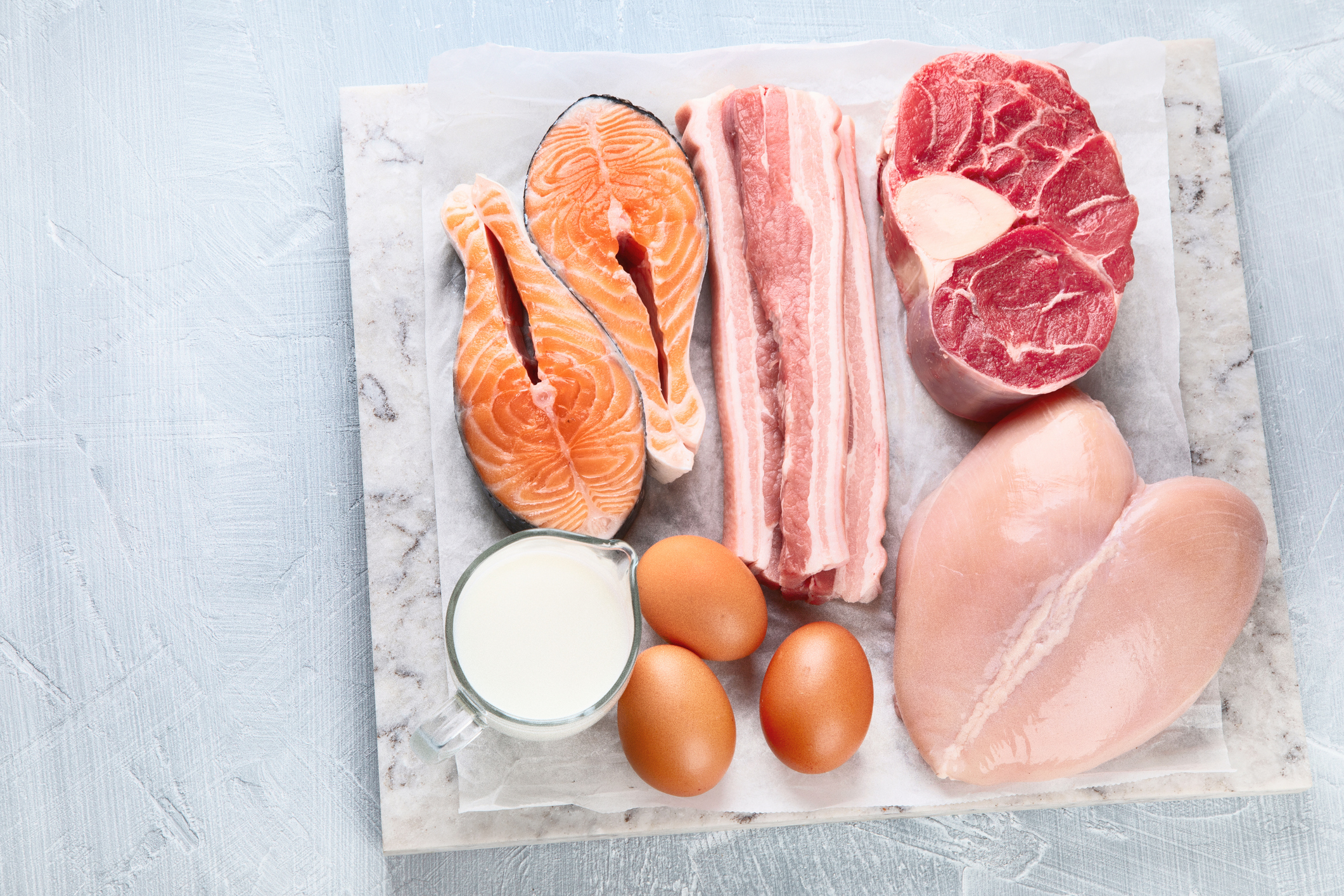
The best sources of those amino acids are found in animal proteins.
Amino acids from animal proteins are the most easily absorbed and used by your body of all the proteins in our food supply.
Foods that contain complete proteins:
- Beef
- Poultry
- Fish
- Eggs
- Dairy products
There are a few proteins that come from plants that are also considered complete proteins, however, we don’t recommend using these as your main source of protein, which we’ll explain shortly:
- Soy
- Quinoa
- Buckwheat
Foods that contain some but not all of the essential amino acids are called incomplete proteins.
Foods that contain incomplete proteins:
- Nuts
- Seeds
- Beans
- Most grains
As you can see though from these lists, there’s lots of room for variety and options to create meals that give you enough protein for weight loss and overall well-being, however, we do recommend you get your protein requirements from animal protein sources. Let’s dig into why that is.
The Difference Between Animal Protein & Plant Protein
At Nutritional Weight & Wellness, we don't count plant proteins (i.e. soy, quinoa, nuts & seeds) as your protein intake requirement.
The bioavailability of plant proteins isn't as strong as animal-based proteins so you have to eat a higher quantity to get the required grams of protein.
There IS protein in those foods, but biochemically vegetable and grain protein foods act like carbohydrates in the body - they can raise blood sugar so that's why we keep them in a separate category from high protein foods.
For example, 1 cup of quinoa has only 8 grams of protein but 40 grams of carbohydrate. I tell my clients to count the quinoa as a carb and the protein in it as a bonus.
As for the nuts and seeds, same thing except they are great sources of fat. If we are eating nuts for protein, the quantity may be higher than the body needs and we can gain weight because of an imbalance in energy intake.
If you do follow a vegetarian or vegan diet, you need to include several different types of these incomplete proteins to ensure that you're making complete proteins or that your body is getting all nine of the essential amino acids.
Examples Of High Protein Meals & Snacks
One way to make sure you’re getting enough protein is to weigh and measure your food to make sure you’re actually getting the amount of ounces cooked you think you’re getting. You can also use a visual cue: 1-2 palms would be a portion of protein for meals.
So, what might a day of enough protein foods look like?
Breakfast: 3 scrambled eggs with spinach cooked in butter with a turkey breakfast sausage and berries
Lunch: 4 ounces of chicken shredded on top of a mixed green salad with an olive oil and vinegar dressing
Snack: cup of plain Greek yogurt or cottage cheese topped with some nuts and berries
Dinner: 4 ounces of salmon with roasted veggies cooked in avocado oil and a half cup of brown or wild rice
Bonus meal idea: tacos! It's an easy one to get all the macros in one dish, with your choice of meat (chicken, beef, pulled pork), greens, peppers, onions, black beans, and topped with guacamole or sour cream.
Tips If You Struggle To Get Enough Protein
If you’re used to sprinkling a little chicken on top of a salad or having a single egg for breakfast, this might be a little intimidating!
This is why we have a robust Nutrition 4 Weight Loss program to help walk you through this lifestyle change and/or nutrition counseling appointments for working individually with a dietitian or nutritionist.
Sometimes a gal needs a little help in the protein department!
To get you started, here are a few steps you can try:
- Pick one meal at a time and see what you can do to up your protein little by little.
If you are only eating 1-2 eggs at breakfast, add one more. If you typically eat only 3 ounces of chicken at dinner, add a little more to your plate. - Don’t forget snacks! Adding protein into your snacks will help up the amount you are getting throughout the day.
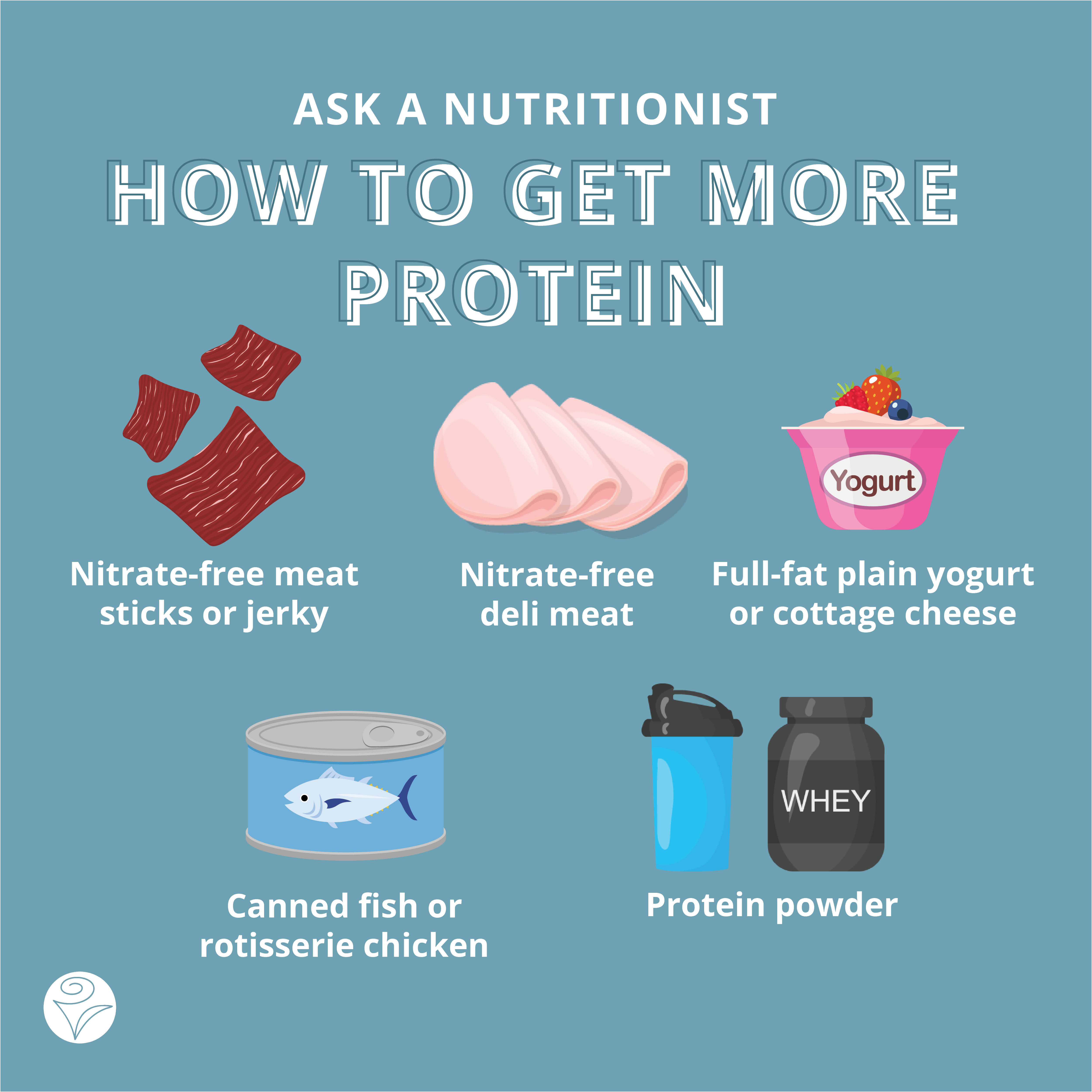
Some grab-n-go options: hardboiled eggs, nitrate-free deli meat, meat sticks, cheese sticks. - Think of snacks as mini meals or a time of re-fueling. If your meals are planned, so should your snacks.
As I mentioned earlier, the between meals/unplanned eating is a HUGE barrier for women and their weight loss goals. It’s easy to not realize what you are actually consuming if you’re not mindful about it.
Feeling hungry? Heat up a small bowl of chili rather than reaching for the crackers. - Add in a protein smoothie with protein powders. This is a great go-to when you’re busy or you just don’t want to sit down to eat a chunk of meat.
Bonus: you can add in lots of extras to get in the other macronutrients and micronutrients (vitamins and minerals!) you need for optimal health. - Bone broth! Sipping on bone broth is a great way to increase protein (and it feels soothing for your insides).
You can also use bone broth in any of the recipes that call for water. Add it to soups and stews or as the water when you are making a batch of brown rice. - Add collagen to coffee or tea, soups, or stir it into yogurt or cottage cheese.
What To Look For In A Quality Protein Powder
Protein supplements, like protein powder and collagen, can be tools for getting more protein.
The quality of your protein powder is just as important as the quality of the lean beef or chicken you grill for dinner! When choosing a protein powder, take a look at the ingredient list and find one without added sugars or a long list of ingredients.
One of NutriKey’s bestselling products (and a protein supplement we recommend!) is the Wellness Whey Protein Powder, which was formulated with the best ingredients in mind. It comes in creamy vanilla and decadent chocolate flavors.
Both options supply bioactive, grass-fed and rBGH-free protein and branched chain amino acids for increasing energy, metabolism and promoting lean muscle mass.
Here’s why we love this protein powder:
- The protein comes from grass-fed cows and is rBGH-free (hormone free), gluten-free, and GMO-free. It mixes well in just water!
- There’s no fructose in the ingredient list as recent research linked excess fructose consumption to an increased risk of diabetes, obesity, and other health conditions. This powder is only sweetened by a little stevia.
- The product doesn’t contain additives like maltodextrin, carrageenan, or soy lecithin as we believe having fewer ingredients is best.
If you are sensitive to whey protein, there are alternatives that may be easier on your digestion and still give you the flexibility of having a serving of protein on the go in a smoothie or baking with it in a recipe.
Our favorite, yummy, dairy-alternative to whey protein powder is the NutriKey Paleo Protein. It is a great-tasting beef protein powder rich in essential amino acids and contains absolutely no lactose/dairy and minimal fat. It comes in two bold flavors of vanilla and chocolate (not a hint of “beef” taste whatsoever!) and it also dissolves easily in a glass of water or coconut milk.
Protein And Weight Loss For Women
To summarize, increasing your protein intake in your daily diet is key.
- Protein makes up all of the tissues in our body!
- It stimulates metabolism by up to 30% for several hours and it helps you feel satisfied and helps prevent cravings.
- Protein supports our ability to move our bodies and prevent injury by supporting our bones, tendons, muscle tissue, and ligaments.
- It’s essential for healthy immune function and is necessary to support feel-good neurotransmitters for a healthy brain.
- Paired with healthy carbohydrates and natural fats, it keeps our blood sugar stable for good energy and a healthy metabolism, the key to losing weight.
There are a variety of animal proteins to choose from: chicken, fish, turkey, lamb, grass-fed beef, eggs, pork, protein powder.
These animal proteins can be consumed in a variety of ways: nitrate free meat sticks, ground meat, steaks, scrambles or quiches, bacon (yes you can have bacon!), roasts in your slow cooker, and a plethora of one pot dishes.
If you need support losing weight, you’ll find our Nutrition 4 Weight Loss Foundations to be life changing and just what you’ve been searching for. Learn More about Foundations and get the weight loss support you need.
For more information on protein and weight loss, check out these resources:
Listen: How To Get More Protein – Ask A Nutritionist
Read:
- Why Protein Is Important
- Do Weight Loss Pills Work?
- The Best Weight Loss Program
- Does Support Really Help With Weight Loss?
Sources:
1) Amino Acid: Benefits & Food Sources (clevelandclinic.org)
2) Women & the Importance of Protein | Dr. Stacy Sims (drstacysims.com)
Protein Recommendations for Weight Loss in Elite Athletes: A Focus on Body Composition and Performance in: International Journal of Sport Nutrition and Exercise Metabolism Volume 28 Issue 2 (2018) (humankinetics.com)
International Society of Sports Nutrition Position Stand: protein and exercise - PubMed (nih.gov)
Share This Article